The digital economy today is facing one of the detrimental challenges of all time. Cybercrime costs are projected to reach $10 trillion annually, while digital friction continues to erode user trust and business efficiency.
Enterprises need secure, seamless digital journeys that protect users while delivering frictionless experiences.
That’s where network APIs come in, the transformative solution that the digital industry needs right now.
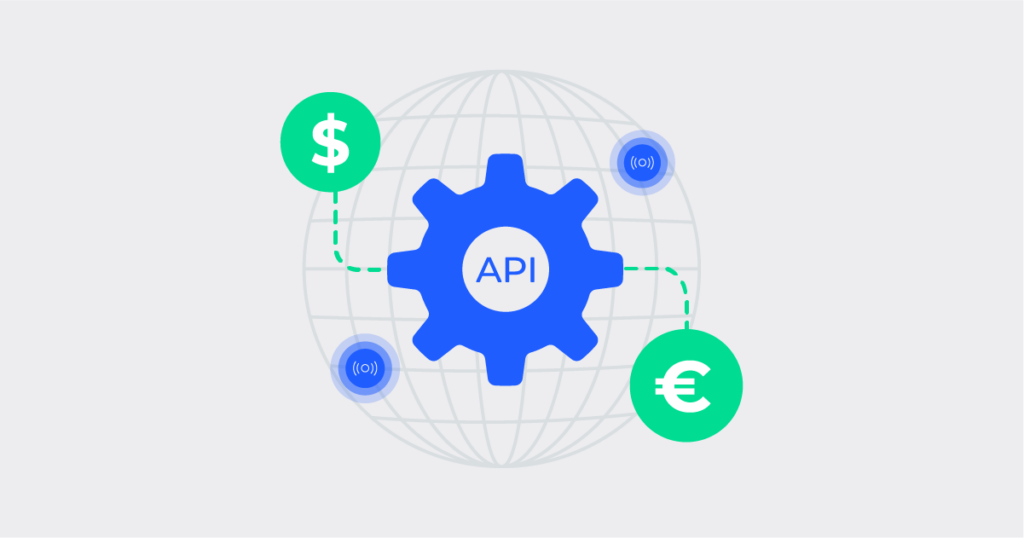
It serves as a standardized interface that allows software applications to interact with and leverage the capabilities of telecom networks.
These interfaces unlock powerful network features like identity verification, location services, and quality of service guarantees that were previously inaccessible to developers.
The stakes are high. Operators have invested billions in 4G and 5G infrastructure. Network APIs represent their opportunity to monetize these investments while meeting evolving enterprise needs.
For developers and businesses, these interfaces provide access to telecom-grade capabilities that enable everything from fraud prevention to mission-critical connectivity.
The question is no longer whether to adopt network APIs, but how quickly organizations can integrate them into their digital strategies.
In this article, we explore everything about network APIs, their capabilities, use cases, challenges, trends, and how Konera, Proximus Global aggregation platform approaches this.
Table of Contents
What are network APIs?
Network APIs are standardized interfaces that allow developers and enterprises to access network services and capabilities, such as connectivity, quality of service, security, and real-time data, via programmable endpoints.
In simple words, network APIs enable apps to talk directly to telecom networks. They help developers use powerful network data and assets to build smarter, more secure apps.
The core capabilities of network APIs
At their fundamental level, network APIs expose verified network data that helps businesses build trust, enhance operational efficiency, and deliver seamless, innovative user experiences. Here are the most impactful capabilities:
- Identity verification (KYC): Validate customer/user identity in real time using operator data, reducing onboarding friction and identity fraud.
- Fraud prevention: Detect SIM swaps, account takeovers, or suspicious device activity instantly, enabling real-time fraud control.
- Device location: Determine the geographic location of a mobile device for fraud prevention, location verification, and geofencing.
- Connectivity status: Check whether a device is active, roaming, or offline to improve message delivery, authentication, and engagement accuracy.
- Network insights: Gain visibility into signal strength, latency, or population density, helping businesses optimize performance and resource planning.
- Advanced capabilities: Features such as Quality on Demand (QoD), geofencing, and edge connectivity deliver more control over application performance and service reliability and deliver a better digital experience.
Top use cases of network APIs
The real value of network APIs depends on how they’re used. Leading enterprises and developers are already embedding them into mission-critical processes and customer journeys.
- Secure and seamless onboarding
By connecting to mobile operators’ data through network API, digital platforms can instantly verify users during registration.
This eliminates manual verification steps, shortens sign-up time, and reduces exposure to fraudulent accounts.
- Frictionless authentication
Replacing OTPs or password-based methods with network API-powered background verification improves both security and user experience.
The process happens silently in the background using APIs like Number Verification, SIM Swap Check, and Device Status.
These APIs work directly with mobile network operators (MNOs) to confirm if the user’s phone number is active, ensure the device hasn’t recently undergone a risky SIM change, and validate possession of the mobile network.
Since authentication happens passively, without passwords or OTPs, it delivers both stronger security and a much smoother user experience.
- Real-time fraud detection
Banks, fintechs, and digital marketplaces are using network API use cases like SIM swap and number verification to detect suspicious changes in user identity or device status, preventing fraud before it happens, resulting in costly chargebacks and penalties for the bank, or directly impacting customers.
- Mission-critical connectivity
Industries such as finance, healthcare, logistics, manufacturing, and media rely on network as code capabilities to deliver low-latency, high-reliability services. In manufacturing, Network APIs enable large, distributed sites to maintain persistent connectivity and dynamically control advanced network features for enhanced safety and responsiveness.
Challenges in realizing the promise of network APIs
Despite their potential, network APIs face significant obstacles that slow adoption and limit impact.
- The fragmentation problem
The telecom landscape remains highly fragmented. Each mobile network operator has built proprietary APIs with unique:
- Authentication methods
- Data formats
- Integration requirements
- Documentation standards
Developers building global applications must integrate with dozens of operators individually. This multiplies development costs and extends time-to-market dramatically.
- Limited global coverage
Most network API solutions offer restricted geographic reach. An application using a single operator’s APIs can only serve that operator’s subscribers in specific countries.
Building truly global services requires partnerships with hundreds of operators worldwide, an impossible barrier for most developers.
- Interoperability issues
Different operators expose different capabilities through their network APIs. A feature available in one market may not exist in another. This forces developers to:
- Build fallback mechanisms for missing features
- Maintain multiple codebases for different regions
- Test extensively across operator networks
- Handle inconsistent error responses
- Developer adoption gap
Network APIs traditionally catered to telco engineering teams, not cloud-native developers. The gap is significant:
Here’s what developers expect:
- RESTful API design
- Comprehensive SDKs
- Interactive sandboxes
- Clear pricing models
- Instant self-service access
Whereas Telcos often provide:
- Complex authentication protocols
- Limited documentation
- Sales-driven onboarding
- Unclear pricing structures
- Restricted testing environments
This mismatch slows adoption even when powerful network APIs exist.
The Konera approach: simple, secure, and global
Konera is a unified network API platform that provides secure, aggregated access to multiple operators through a single interface.
Instead of managing dozens of operator relationships and custom interfaces, enterprises can plug into a single, standardized environment.
Key advantages:
- Single integration point: One secure gateway to access real-time telecom data globally.
- Standardized framework: Built in compliance with CAMARA, the open-source project (led by the GSMA and the Linux Foundation) that develops and tests network APIs for cross-network consistency. The GSMA Open Gateway is a global organisation unifying the mobile ecosystem and representing the interests of over 1,100 operators and businesses worldwide.
- Faster time-to-market: Rapid onboarding and deployment through unified documentation and testing.
- Enterprise-grade security: Access to operator-verified data ensuring authenticity and compliance.
Why it matters:
Proximus Global removes the complexity of individual operator integrations by offering one connection for global reach. Developers work with a single set of APIs, while Konera manages the security and compliance of standardized APIs behind the scenes.
This streamlined approach accelerates deployment from months to weeks, enabling businesses to scale quickly and securely.
Value proposition: Making network APIs easy to use at scale
For many enterprises, the barrier to adopting network APIs isn’t the technology but the fragmentation across operators, regions, authentication systems, and data formats.
Network APIs offer high-trust telecom intelligence such as identity, location, and device status, but implementing them across markets can quickly become resource-intensive.
There are platforms like Konera that simplify this landscape by providing a consistent way to access telecom-verified data. All this is happening when interoperability and compliance are simultaneously handled in the background.
For mobile network operators, unified platforms make it easier to securely expose underused capabilities in a standardized format, accelerating adoption across industries.
Key differentiators: Why Konera stands apart from others
What makes Konera the best is not just its aggregation but also its global enablement and standardization.
- Global expertise and operator relationships: Proximus Global has more than two decades of experience working with 600+ mobile operators worldwide. We leverage a deep, established ecosystem to ensure consistent, reliable access to network capabilities as coverage continues to expand.
- Built on proven infrastructure: Konera leverages Proximus Global’s deep ecosystem of 3,500+ enterprises, OTTs, and MNOs.
- Technology leadership: We combine network APIs with advanced enablers such as TS.43-backed SIM authentication, network intelligence, and emerging AI capabilities.
Market trends and the future outlook for network APIs
The network API market is experiencing explosive growth, driven by industry standardization efforts and unprecedented demand for programmable network capabilities across sectors.
How are GSMA Open Gateway and CAMARA unifying the industry?
Industry-wide initiatives are unifying the fragmented network APIs landscape.
These initiatives deliver three critical benefits:
- Simplified integration: Developers learn one API specification instead of hundreds of proprietary variants
- Accelerated deployment: Build once and deploy everywhere without operator-specific modifications
- Bridged ecosystems: Modern API design principles make telco capabilities accessible to cloud-native developers
When you adopt these RESTful architectures and developer-friendly approaches, such initiatives make network APIs accessible to millions of developers who build on platforms like AWS, Azure, and Google Cloud.
Projected market growth and revenue opportunities
The business case for network APIs is accelerating rapidly as telecom operators recognize the untapped potential of exposing network intelligence securely through APIs.
According to McKinsey, over the next five to seven years, the network API market could unlock between $100 billion and $300 billion in connectivity- and edge-computing-related revenue for operators.
Also, it will generate an additional $10 billion to $34 billion directly from API transactions themselves.
These forecasts point to a clear trend:
- Operators are shifting from bandwidth sellers to API-driven service enablers.
- Enterprises can build new digital products powered by verified network data, improving customer journeys such as onboarding, login, and purchase flows with less friction and greater trust.
- Developers gain scalable access to trusted telecom intelligence for fintech, IoT, and logistics, gaming, eCommerce, healthcare, transport, and other emerging verticals.
- Agentic AI systems (AI systems capable of autonomous decision-making and action) can rely on real-time, context-aware data. Network APIs provide verified, low-latency telecom intelligence, such as location, identity, and quality-of-service metrics, that can be orchestrated by AI agents to deliver smarter automation, personalized experiences, and dynamic workflows across industries.
Conclusion
Network APIs are unlocking transformative potential for digital trust, security, and innovation.
As industry standardization through CAMARA and GSMA Open Gateway removes barriers, programmable network capabilities become accessible to enterprises worldwide.
Konera stands at the forefront of this transformation. We are bridging the gap between the telecom world and digital economy.
The shift from best-effort connectivity to intelligent, network as code infrastructure is reshaping how applications deliver secure, seamless experiences. Organizations that act now will define the competitive landscape of tomorrow.Ready to transform your digital infrastructure? Discover how Konera’s network API platform delivers telecom-grade capabilities through a single integration at Proximus Global.
 Share
Share
 Share
Share